
Sources for Torrington Previous Residents
One Torrington address can be followed across record families that were created for different reasons. Torrington deeds show recorded interests. Torrington directories show a printed name and address. Torrington census schedules show a household at an enumeration date. Torrington Sanborn maps show a building and street setting. Torrington permits date work. Torrington newspapers and probate files can explain a move, death, estate, or business connection.
| Source | Years captured | Where held | What it shows |
|---|---|---|---|
| Torrington SearchIQS index and images | Index books back to 1732; later coverage varies | SearchIQS / City Clerk | Recorded parties, instruments, dates, legal descriptions. |
| Torrington/Winsted directories | 1890-present physical run | Torrington Library | Name and address continuity, occupations, spouse or widow marks. |
| Torrington Beardsley directories | 1901-1910 and 1915-1923 visible | Beardsley Digital | Searchable page images and historical context. |
| Torrington federal census | Public schedules through 1950 | NARA, Census, libraries | Household, age, birthplace, occupation, enumeration geography. |
| Torrington Sanborn maps | 1884, 1891, 1896, 1901, 1909, 1915, 1924 | LOC and archives | Building footprint, use, materials, and neighboring structures. |
| Torrington permits and newspapers | Permits online from 03/18/2024; newspapers 1874-2023 | OpenGov, City staff, Library | Work dates, notices, obituaries, business, and civic clues. |
The Torrington years are captured coverage, not a guarantee that every page survives or every volume is indexed. Record the exact source and gap as part of the history.
Torrington Address Keys
Start with the current Torrington assessor card and write down the situs address, owner mailing line, MBL, UID, legal description, and volume/page clue. The MBL in the captured sample uses the format 126/025/007, while UID 9983 is a separate portal key. Those identifiers are stronger bridges than a street number alone.
Open Torrington MapXpress to compare the parcel, address point, adjacent lots, street, and map layers. Keep the current card separate from the Torrington historical question. A Torrington assessment card can point to the parcel that exists now even when an older deed or directory used another lot description or street form.
- Chain of title
- A sequence of recorded interests, usually followed from a later grantee back through earlier grantors.
- Grantor
- The party conveying an interest in a recorded instrument.
- Grantee
- The party receiving an interest in that instrument.
- Legal description
- The deed or map wording that identifies land by lot, boundary, easement, or other description.
Do not treat a current indexed Torrington owner as the first of the previous residents. It is the bridge into the historical trail.
Torrington Deed Chain Backward
The Torrington land-record route begins with the City Clerk and the SearchIQS Torrington index. Search the current indexed owner as grantee, compare the parcel or legal description, and open the newest deed or instrument image when available. Then search the grantor as an earlier grantee. Repeat the switch between roles while checking the address, lot, MBL clue, and recording date.
- Save the current card’s owner, MBL, UID, legal description, and volume/page clue.
- Search Party 1 or Party 2 with the latest owner and a date or document group.
- Read grantor, grantee, date, book/page, instrument number, and legal description.
- Search the earlier grantor as grantee and test initials, entities, trusts, estates, and spelling variants.
- Save the exact gap when an image is missing, then ask the City Clerk for the book or a copy.
A Torrington deed chain shows recorded interests. It does not list every person who occupied an address or explain each move.
Torrington 1732 Index Quirk
SearchIQS is unusually deep for Torrington. The captured help describes index books reaching back to 1732 and gives different index and image ranges by book and record type. It also identifies an early-1960s discrepancy: the current help and an older Torrington PDF do not state the same image cutoff.
That Torrington disagreement is useful. Save the book/page and date even when the viewer does not show an image. Check the current help, the older town note, and the City Clerk’s books or request route. A missing online image is an access gap, not proof that the recorded instrument is absent.
Search habit. Keep index citations even when images differ by volume. The book and page may be the only bridge to a clerk-held copy.
The early index depth can take a house history back before the printed city directory era. Use it with maps, church or cemetery leads, and later address sources rather than asking the deed index to supply occupants.
Torrington Directory Shelf
The Torrington Library city-directory collection runs from 1890 to the present in the captured description. It is the main source for previous residents who appear in a printed name-to-address entry. Copy the exact street form, number, occupation, spouse or widow mark, and any business line. Check nearby years before deciding that a person left when a name disappears.
Ask whether the Torrington target volume has a reverse or criss-cross section. The research confirms the collection, but not a complete address-to-name run for every year. When a reverse section is absent, pair the name section with a Torrington assessor parcel, deed, newspaper, census, or map.
The Torrington city directory page covers the publishers, digitized runs, and entry-reading method. The previous residents workflow uses those collections to follow one address backward.
Torrington 1909 Sanborn Anchor
A Sanborn map can bridge an old street description to a building footprint. For Torrington, the captured Library of Congress collection includes sheets from 1884, 1891, 1896, 1901, 1909, 1915, and 1924. Note the sheet number, intersection, building shape, materials, use label, and neighboring structures.
Pair the Torrington 1909 map with the closest Torrington city directory, deed, permit, or newspaper. A footprint can show that a structure stood at a location or changed use. It does not name every previous resident and it is not a boundary survey.
Note: Use the map as a physical anchor, then let the deed or directory supply the person or recorded-party clue.
Torrington Permit Dates
Current Torrington permit files are online through OpenGov from March 18, 2024. A file may show an address, applicant or owner field, work description, status, application date, and final Certificate of Occupancy or Certificate of Approval clue. Older files are requested by address through city staff using the title and property-search route.
Use a Torrington permit to date construction or alteration, not to prove continuous presence. An applicant could be a contractor or representative. Compare the final document with a deed, directory line, map, or newspaper notice. If the file is not online, ask for the address range and project type rather than “everything about the house.”
Torrington Obituaries and Probate
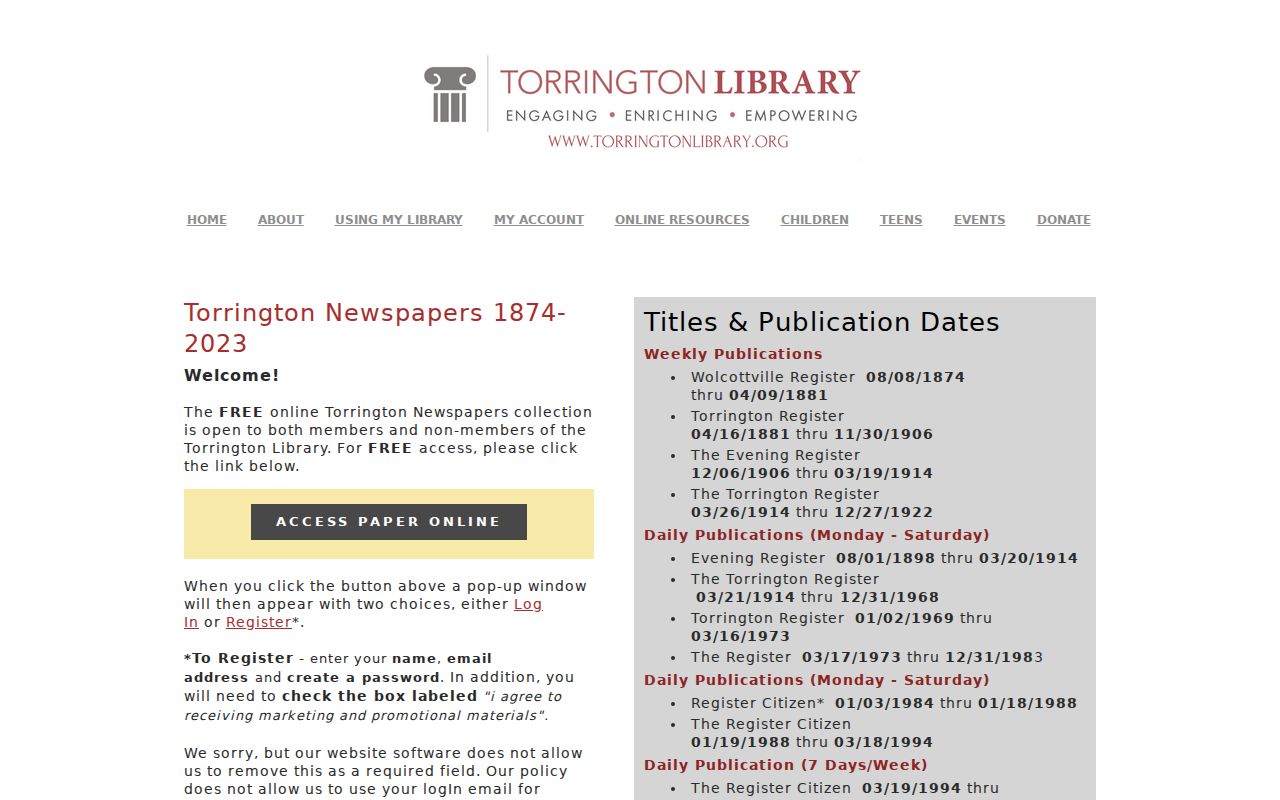
The Torrington Library newspaper collection covers local runs from 1874 through 2023 in the captured page. Search a surname, address, business, organization, and OCR variant. An obituary can supply a death date, relatives, former address, or community connection. A marriage notice or legal notice may provide a different date marker.
For a Torrington estate trail, move from the notice to Probate District 24. Search the case lookup, save the case number and date, and request a specific public filing if needed. A probate petition can identify a fiduciary or heir while a protected address or restricted exhibit remains unavailable.
The Torrington Library newspaper route helps connect previous residents to dated notices and obituaries.
An obituary is not a certified death record. Keep the publication, date, page, and exact wording as a historical clue.
Torrington Directories and Census
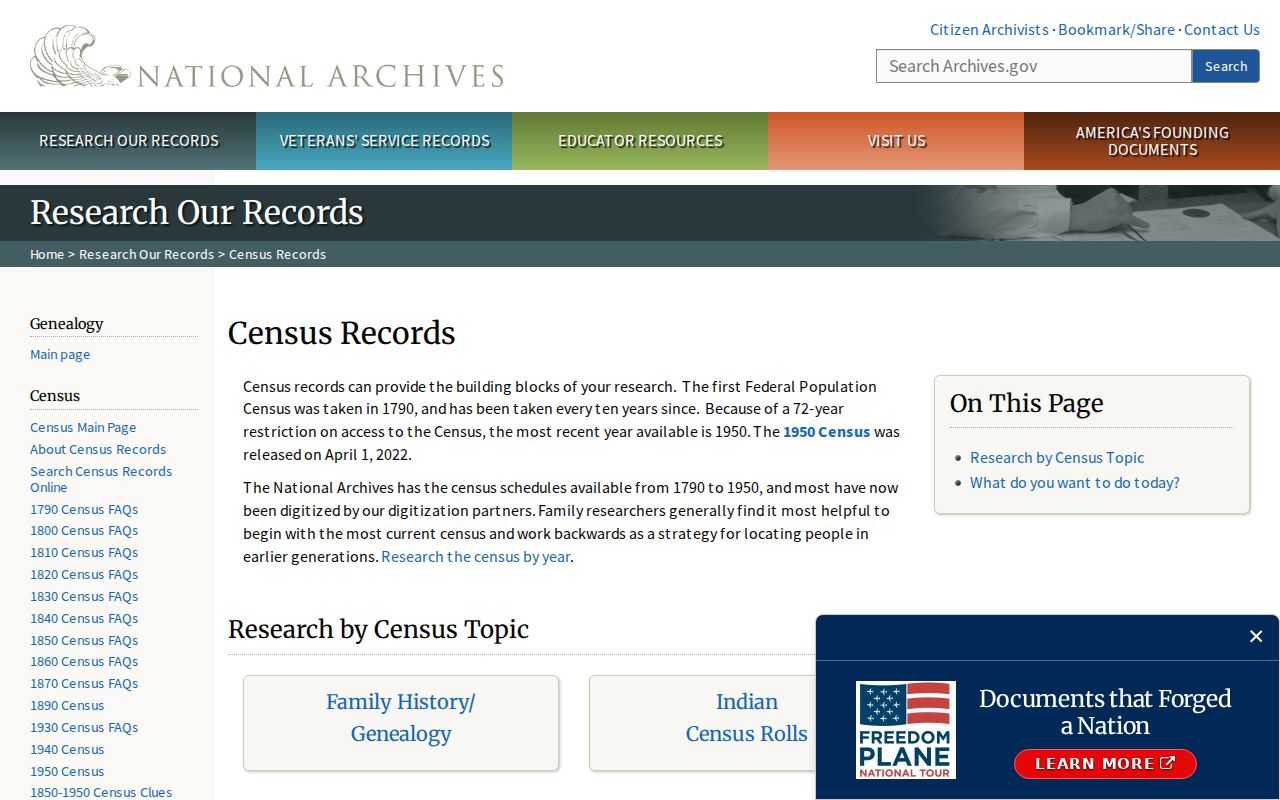
The National Archives releases federal census schedules on a 72-year timetable, with schedules through 1950 currently public in the captured research. A Torrington census can add age, birthplace, occupation, household members, and enumeration district to a directory entry. It is a snapshot, not a yearly address record.
Match the Torrington street number when present, but also compare ward or enumeration district, names, ages, and occupation. A historical street can appear under a different spelling or geography. Record the census image, schedule year, page, and household relationship beside the directory citation.
The National Archives census route supplies the public schedule rules used to pair an older Torrington address with a household snapshot.
Torrington Street Name Gaps
The captured official sources do not identify a dated Torrington-wide renumbering or renaming project. When a directory or deed stops matching, preserve the old wording and ask City Planning, Engineering, or GIS about an E911 table, street-name history, annexation record, or number crosswalk. Do not declare a renumbering year without a source.
Use the current Torrington parcel’s MBL and legal description as the bridge. Compare historic Sanborn sheets, neighboring entries, subdivision maps, permits, and newspaper notices. Search “St.” and “Street,” directional variants, unit forms, old lot labels, and nearby addresses. A gap may be a spelling change, a publication break, a parcel split, or a genuine move.
Torrington House-History Files
The Connecticut State Library old-house guide recommends starting with the current Torrington parcel and legal description, then working through Torrington deeds, maps, directories, census, newspapers, and permits. Locally, the Historical Society research library at 192 Main Street works by appointment and holds maps, photos, homes, businesses, blueprints, and the Torrington Register index from about 1900 to 1983. The library is the route for the physical directory and newspaper shelf.
The captured sources do not confirm a dedicated Torrington house-history file or paid research service. Ask both institutions whether a vertical file, reverse-directory run, photograph collection, or staff search exists for the address. Send the street, number, approximate dates, former name, and record type. Ask whether photos or scans are allowed and whether a fee applies.
A complete previous-residents result is rare. A well-sourced sequence of recorded interests, dated directory entries, census snapshots, building maps, and notices is more honest and more useful.
House-history boundary. Use the address trail for genealogy and documented local history. Stop before a record becomes an attempt to expose a protected current location.